If this is the case and we assume that the average digital nomad only earns 50% of the currently average income (i.e., $55,000), and we further assume that these one billion people pay 10% income tax, then that equates to $5.5trillion of tax revenues. Hence, this helps to explain why various jurisdictions are scrambling to roll out the red carpet to attract these mobile, often highly intelligent young workers to come and work in their cities.
Top 10 Cities to be a digital nomad in 2022
Source: International Accounting Bulletin
According to Flex Jobs, remote workers feel they are more productive compared to...
If this is the case and we assume that the average digital nomad only earns 50% of the currently average income (i.e., $55,000), and we further assume that these one billion people pay 10% income tax, then that equates to $5.5trillion of tax revenues. Hence, this helps to explain why various jurisdictions are scrambling to roll out the red carpet to attract these mobile, often highly intelligent young workers to come and work in their cities.
Top 10 Cities to be a digital nomad in 2022
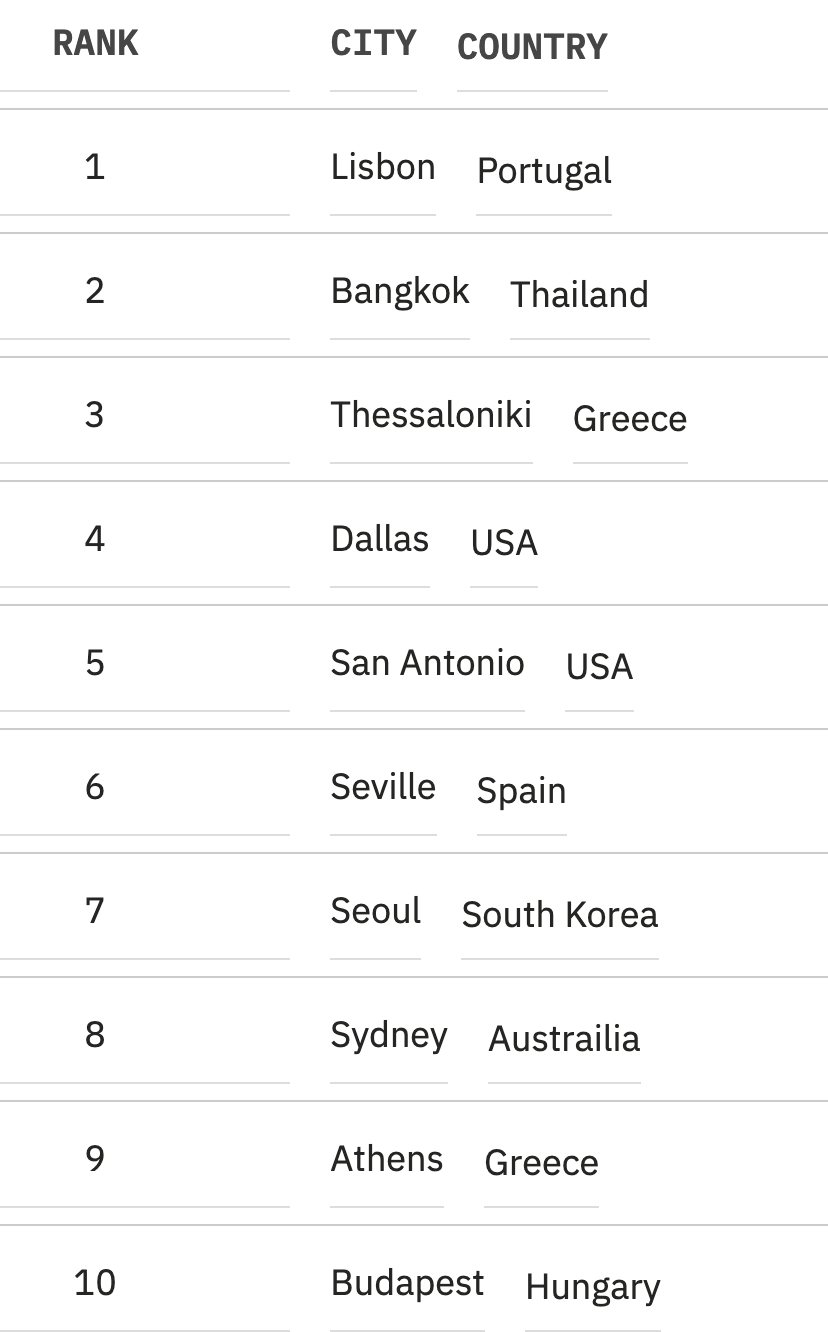
Source: International Accounting Bulletin
According to Flex Jobs, remote workers feel they are more productive compared to working in an office and list the following reasons as to why:
-
fewer interruptions (68%)
-
quieter work environment (68%)
-
more comfortable workplace (66%)
-
more focused time (63%)
-
avoidance of office politics (55%)
There are now forty-four digital nomad visa programs, as opposed to only twenty-one in February 2021, whereby making it increasingly easier to live and work in various locations. Spain has just announced its new digital visa program as it looks to tempt digital nomads (not to its great weather, beaches and food), but by reducing the tax digital nomads will have to pay from 25% to 15% for the first four years. When recently talking to Fraser Edwards, CEO of cheqd and a self-processed digital nomad, his response was: “I obviously expected to enjoy the digital nomad life but the biggest surprise was how much it reduced my stress levels whilst building a start-up. There is something extremely calming about being in a new place and being able to explore over evenings and weekends. This means I’m able to work much more efficiently and thoughtfully than being driven by stress. The main challenge is making sure to have consistent and predictable connectivity otherwise you can achieve the exact opposite, complete meltdown trying to find a connection so preparation and research for your next spot is absolutely crucial!”
Meanwhile, with regards to Decentralised Autonomous Organisations (DAOs), Ethereum defines them as:
-
“member-owned communities without centralised leadership
-
a safe way to collaborate with internet strangers
-
a safe place to commit funds to a specific cause.”
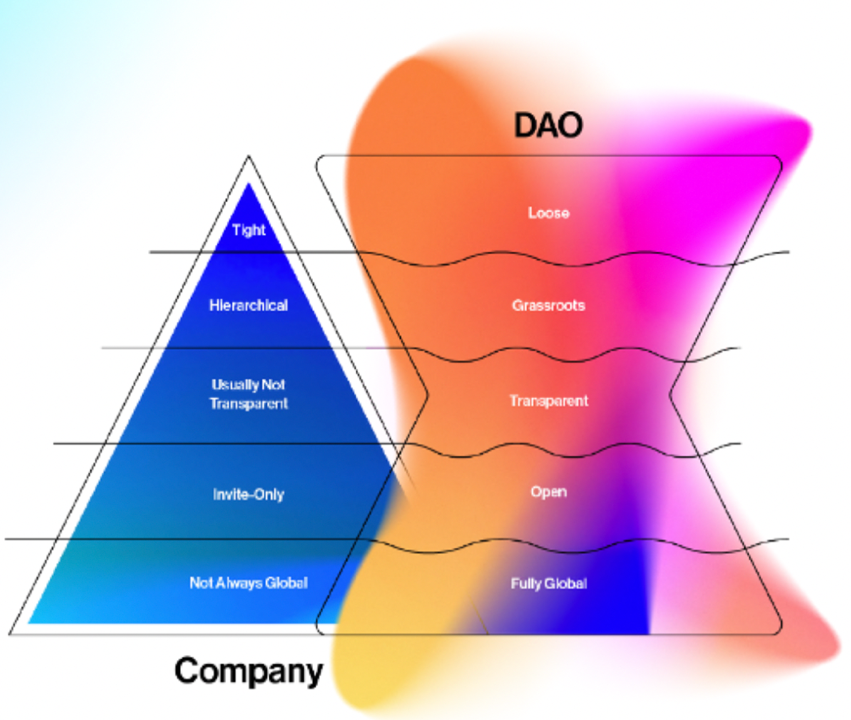
However, not all of the above may be the case depending on the DAO concerned but there is, without doubt, growing interest in DAOs and increasing awareness and discussion of the merits of decentralised finance (DeFi). In essence, DAOs are a new type of business structure using blockchain technology and employing smart contracts whereby removing the need for a centralised command and control structure - such as a board of directors and/or managers. Processes and procedures are voted on and agreed by the community then coded using smart contracts, which are further made available to the general public for all to see (therefore making DAOs very transparent). An example of one of the biggest DAOs is Uniswap which enables peer to peer exchange of crypto currencies built on the Ethereum blockchain. Uniswap is referred to by some as a DeFi platform or a decentralised exchange (DEX), and it deals in 170 cryptos with over $5billion of assets on its platform.
For now, one of the challenges facing regulators as regards DAOs and DEXs (such as Uniswap) is, what happens when something goes wrong? Who can be held accountable? Since a DAO has no management structure it becomes very difficult to comply with existing regulation. For example, how can a UK-based DAO comply with the Senior Management and Certification Regime (SM&CR) which replaced the Approved Person Regime? And this is assuming that one is able to determine the exact jurisdiction of the DAO itself. Yet, if DAOs can truly be more transparent and the rules and procedures that they conform to are clear for all to see (by regulators and customers alike), could the use of DAOs actually improve the robustness of the financial services sector? That is, DAOs could remove the ‘fat finger’ errors which have caused many a headache for risk managers and compliance directors in financial centres across the globe. There is no reason why a DAO that complies with relevant financial regulation could not be established, building compliant procedures into the way it functions. Incidentally, DAOs are currently only recognised in five jurisdictions; Wyoming (USA), Malta, Gibraltar, Estonia and Switzerland.
However, DAOs potentially have a much wider role to play in corporate governance and society as a whole. Talking to Samuel Barlow, founder and CEO of Loop, who has been looking at how technology is able to potentially improve governance, he has said: “DAOs are in their early days, and we are discovering many issues around governance from a macro and a micro level. This is what is wonderful about this moment in the evolution of DAOs. The potential for coordinating and enabling humanity through these shared responsibility approaches is enormous. Only time and effort will lead to strategies for decentralised governance to work optimally. This is especially highlighted with the ever-increasing number of people working nomadically and internationally. If our knowledge and wisdom is becoming more mobile and international, then it only makes sense that our governance approaches should follow accordingly.”
DAOs offer an alternative community governance for any organisation
Source: Crypto Report 2022
Already there are examples of DAOs being used in cities as a way to offer greater transparency of how citizen’s funds are being used - such as CityDAO and YIMBYDAO. Research affiliate at Stanford University’s Digital Economy Lab and Columbia Business School, Christos A. Makridis, believes: “DAOs can refocus people in cities on the principles, goals, and concepts that unite them…DAOs allow people to communicate, vote, and supervise easily through smart contracts… Soon, DAOs may well become one of the most effective ways to govern cities and bring people together in authentic community.” We are already beginning to see countries issuing digital visas vying to be the most attractive jurisdictions in order to attract well-educated, digital nomads and companies, so that governments can generate additional tax revenues. A significant driver that is likely to further fuel interest in decentralisation is the growth of Web 3 - that is, the metaverse often harnessing the power of DAOs to create board-less, global communities. As the World Economic Forum has summarised: “DAOs promise new forms of organization structures and collaboration in the digital and global space. As significant digital value is created, through non-fungible tokens or the metaverse, DAOs could be the native entity for value creation in cyberspace”.
This trend to digital decentralisation is undoubtedly changing the way we work and impacting the way organisations and potentially society are being structured and governed. Authoritarian governments are likely to be less supportive of DAOs since they offer a threat to being able to control their citizens. However, as national boarders break down (due to the expansion of the digital economy), it may well prove to be a real challenge to exclude citizens from engaging in DAOs.


 Written by Jonny Fry